

Water-Damaged Stucco Repair in Reno, NV
We find where water is getting in, then rebuild the wall so it stays out — done right for Reno’s high-desert freeze-thaw winters. Licensed & insured, with a written workmanship warranty.
Water-damaged stucco repair fixes walls where moisture has gotten behind the finish — the cause of brown stains, chalky efflorescence, soft or hollow spots, and peeling. In Reno we trace the source first — failed flashing, a buried weep screed, or unsealed penetrations — then rebuild the lath and finish. Expected repairs range from a few hundred to several thousand dollars; your exact price is free on-site.
Find the water source first — then repair the stucco
Stucco is a barrier, but it isn’t the whole wall. Behind the finish sits a weather-resistive building paper, a metal weep screed at the base, and the lath that holds everything together. Water almost never soaks straight through a sound wall — it sneaks in at the weak points: failed flashing above windows and along the roofline, a clogged or buried weep screed, and unsealed penetrations for pipes, vents, hose bibs, and light fixtures. Repair the stucco without closing that entry point and the same stain returns within a season.
That’s why every water-damage job starts with a moisture-focused inspection instead of a quick patch. We locate where water is actually getting in, confirm how far it has traveled through the lath and framing, and only then price the repair. It’s the difference between a fix that holds for years and one that fails the next time the Washoe Zephyr drives rain against a west-facing wall.
Signs of water-damaged stucco (a quick checklist)
If you notice any of these on your Reno or Sparks home, water is likely already behind the finish — and the sooner it’s checked, the smaller the repair:
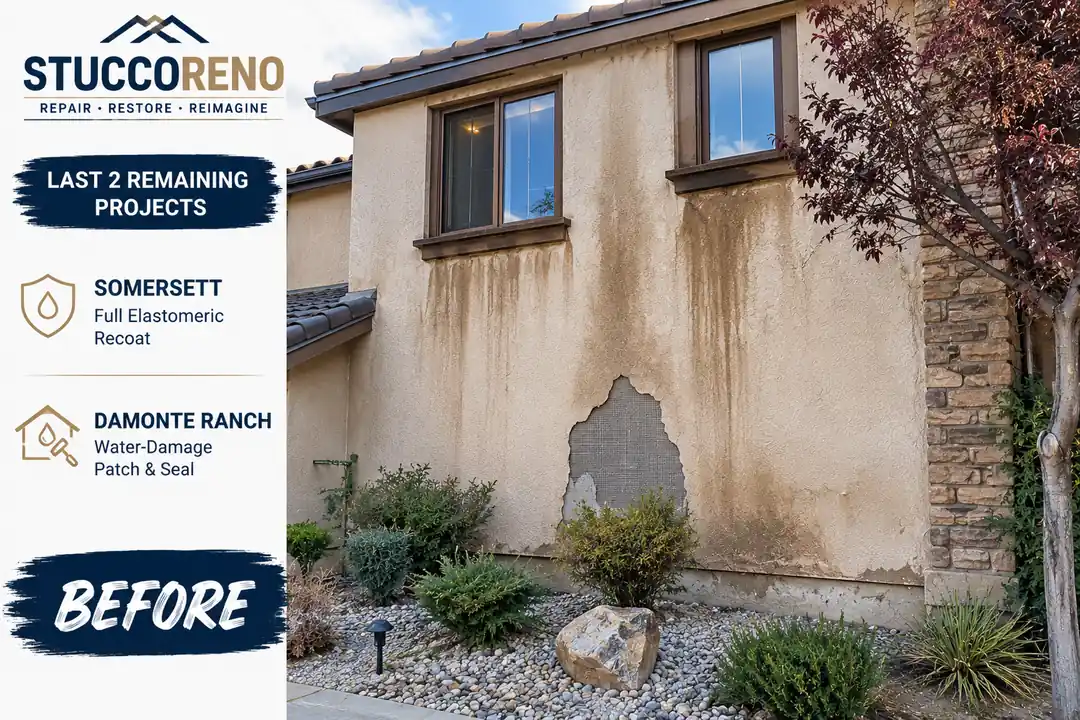
- Brown or rust-colored water stains streaking down the wall, often under windows or along the roofline.
- White, chalky efflorescence — powdery mineral salt left behind as moisture pushes back out through the stucco.
- Soft, spongy, or hollow-sounding stucco when you tap it, a sign the lath or base coat behind it is failing.
- Bubbling, blistering, or peeling paint and finish coat as trapped moisture forces its way outward.
- A musty smell or visible mold on an interior wall, which points to water sitting in the wall cavity.
- Cracks or gaps near windows, the roofline, or the weep screed at the base of the wall — the classic entry points.
One symptom on its own may be minor. Two or three together usually mean the wall needs to be opened and dried, not just sealed over.
Why water gets behind stucco in Reno’s high desert
Northern Nevada is hard on stucco in a specific way. Daytime sun at roughly 4,500 feet heats the wall; overnight temperatures drop sharply, and that constant expansion and contraction works hairline cracks open. Any water already sitting in those cracks freezes, expands, and pries them wider — the freeze-thaw cycle that turns a cosmetic crack into an open door for moisture.
Then the weather delivers the water. Sudden high-desert storms and wind-driven rain off Peavine Peak and the Washoe Zephyr push moisture sideways into west- and south-facing walls — exactly the exposed elevations you see on hillside homes in Somersett, Caughlin Ranch, and ArrowCreek. Down at the base, snowmelt and sprinkler spray collect against a weep screed that’s often buried behind soil or mulch, so water that should drain out just sits and soaks in.
Add unsealed penetrations and flashing that has dried out and shrunk in our low humidity, and water finds a path behind the finish long before most homeowners ever see a stain.
How we repair water-damaged stucco
Once we’ve traced the source, the repair follows a clear sequence:
- Stop the source. We fix the real entry point first — reflash the window head or roofline, clear or reset the weep screed, and seal penetrations — so the wall stays dry after we close it.
- Open and dry. We remove the failed finish and any rusted lath or deteriorated building paper, then let the cavity dry out. Damp framing gets checked, not buried.
- Rebuild the layers. New weather-resistive barrier, fresh galvanized lath, and a new weep screed where needed — the moisture-management system that makes stucco actually work.
- Re-stucco and match. We apply the scratch, brown, and finish coats (or repair the EIFS system), then color- and texture-match the patch to your existing wall so it disappears.
- Seal for our climate. Where it helps, a flexible elastomeric finish bridges hairline cracks and sheds wind-driven rain, backed by a written workmanship warranty.
For synthetic stucco (EIFS), the steps are similar but the moisture check matters even more, because the foam layer can hide water for a long time before it ever shows on the surface.
Expected stucco price ranges in Reno
These are expected Reno-area ranges to help you budget — water-damage pricing depends entirely on how far the moisture spread, so your exact, itemized price is always free after an on-site inspection.
| Service | Expected price* | Typical time |
|---|---|---|
| Surface stain clean & seal (minor source) | $450 – $1,200 | 1 day |
| Single-section lath & finish rebuild | $1,200 – $3,500 | 2–3 days |
| Flashing / weep screed correction | $600 – $2,500 | 1–2 days |
| Multi-area / behind-window repair | $3,000 – $6,500 | 3–5 days |
| EIFS moisture repair (per affected area) | $1,500 – $5,000 | Varies |
| Extensive damage / partial re-stucco | $5,000 – $12,000+ | 4–7 days |
*Expected ranges for budgeting only — not a quote. Your exact, itemized price is always free after an on-site inspection.
Drag the slider to see the difference
Slide each image to reveal the finished, color-matched result on real Reno–Tahoe homes.
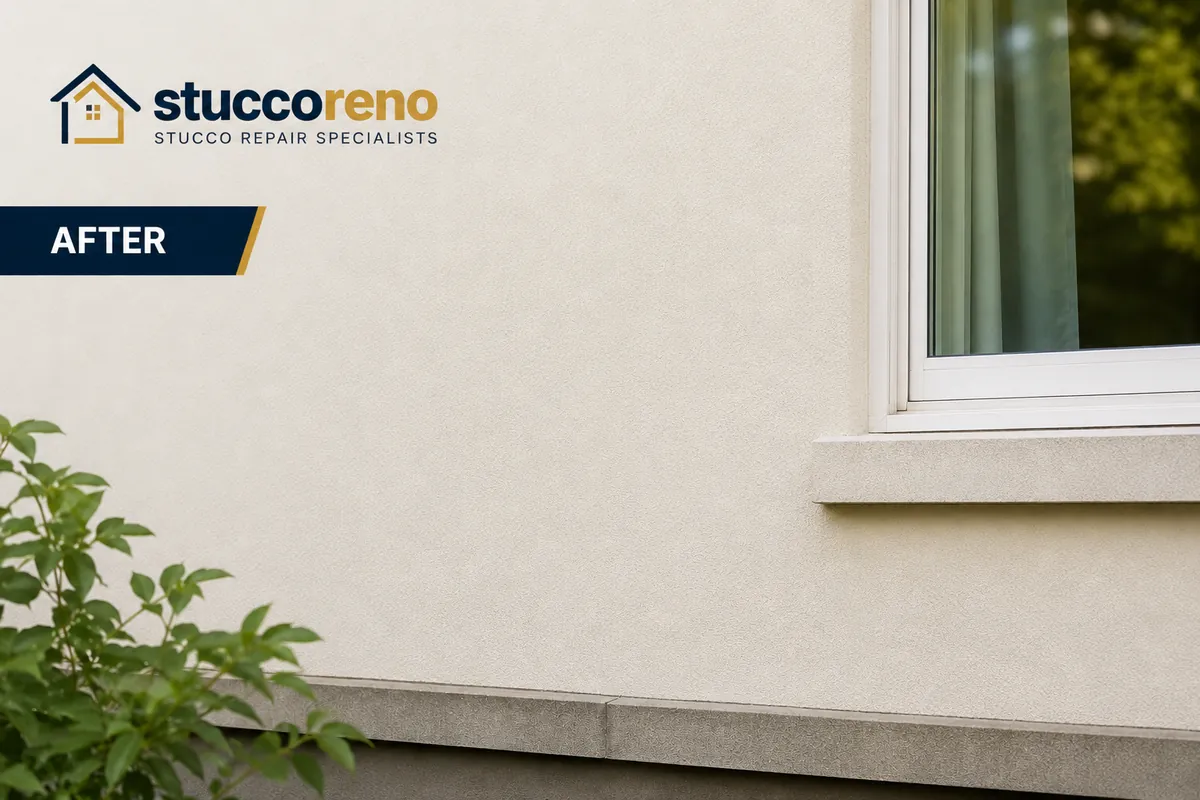
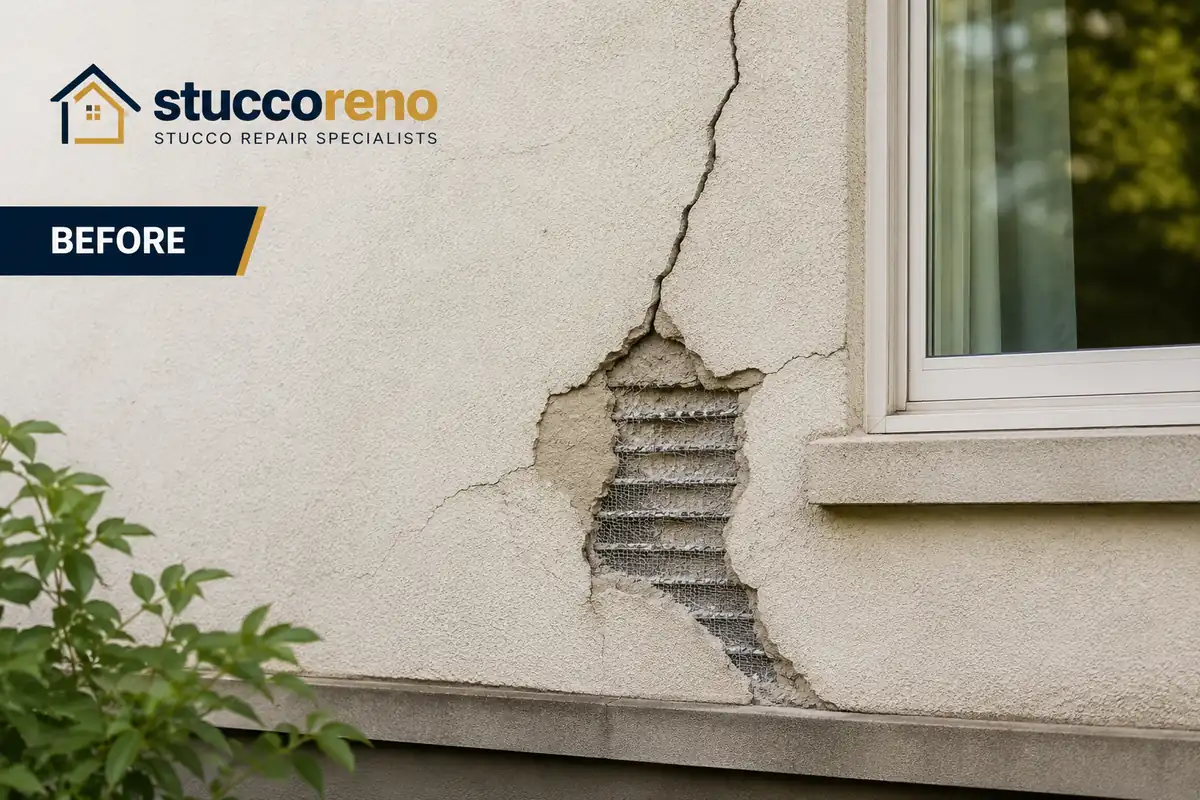
Crack repair, color-matched and sealed

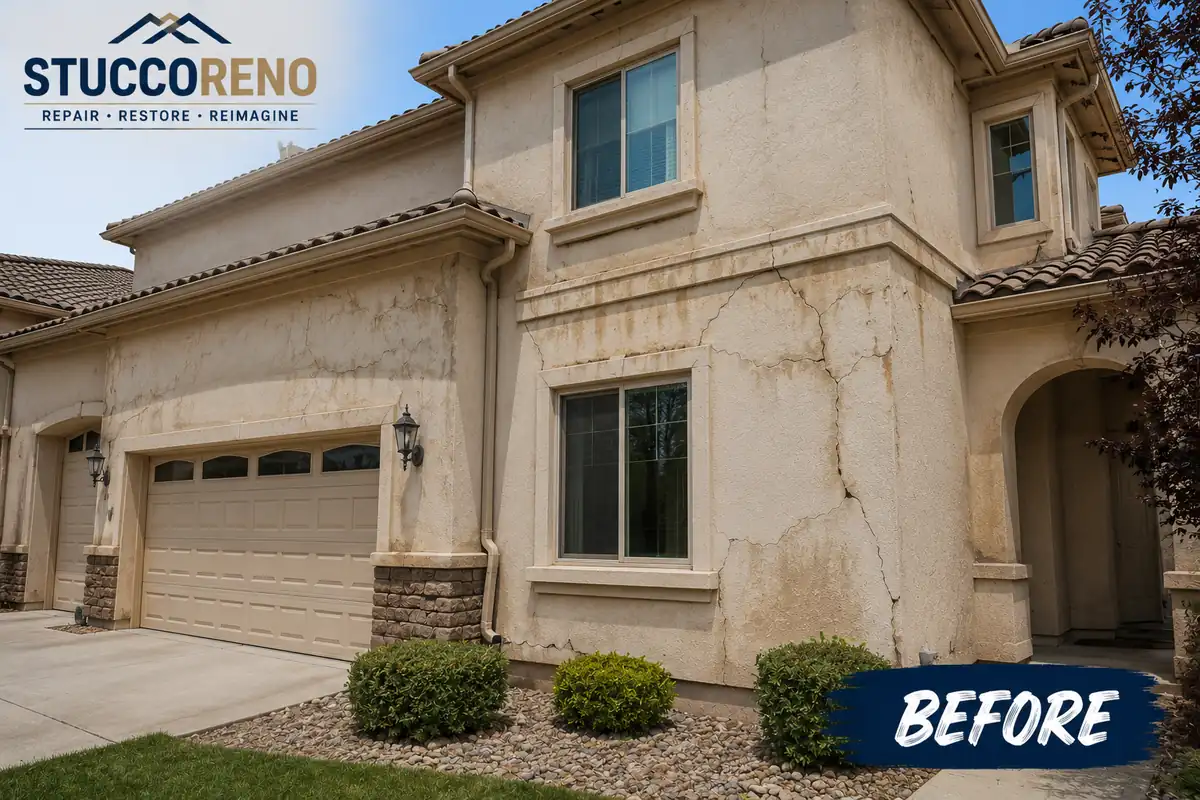
Full re-stucco and fresh finish
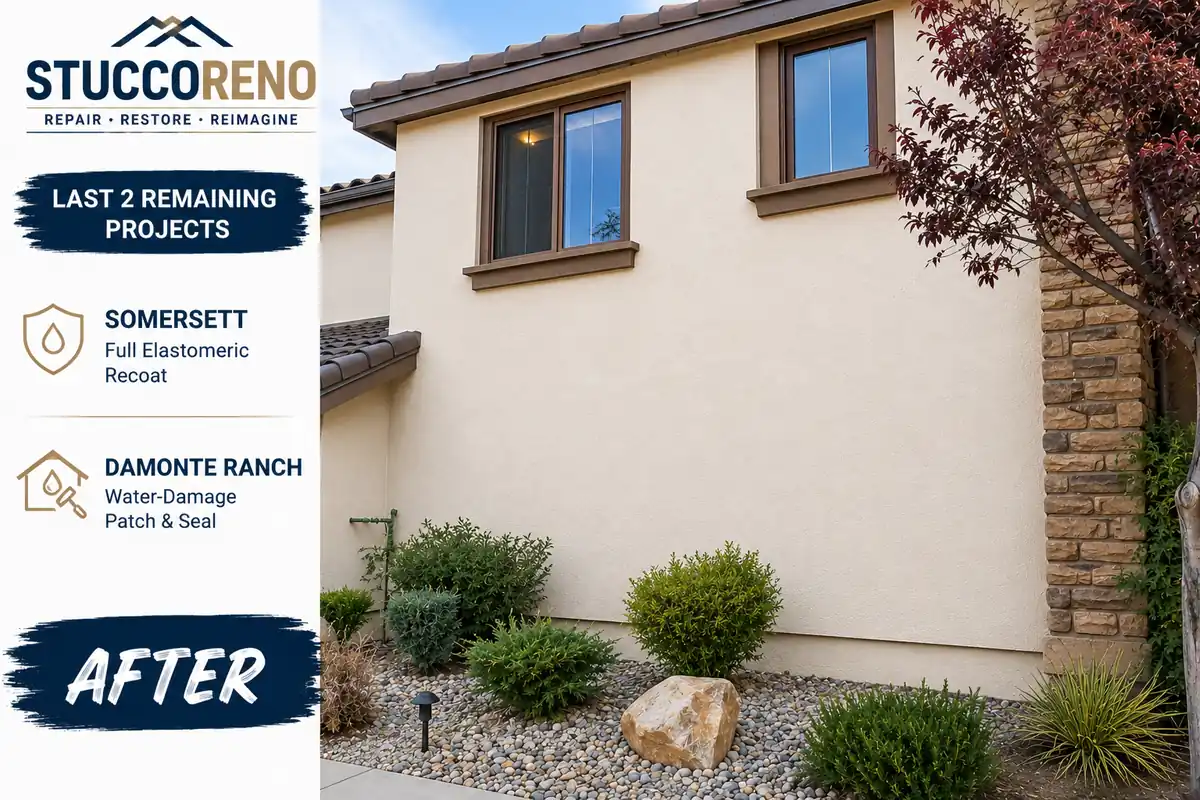
Water-damaged wall fully restored
Recent stucco projects
A look at real crack repairs, re-stucco, and exterior finishes across Northern Nevada. Click any photo to enlarge.
Stucco services across Northern Nevada
Browse our other service areas and stucco services — one local crew for the whole Reno–Tahoe region.
Talk to a licensed Reno stucco contractor
Licensed, insured, and color-match guaranteed across Reno, Sparks, Carson City and Northern Nevada. Free written estimates, most booked within 24–48 hours.
Prefer we call you? Request a callback
Tell us what’s going on with your stucco and we’ll get you a written, itemized quote — usually within 24–48 hours. No pressure, no spam.
- 100% free & no obligation
- Written, itemized pricing
- Licensed & insured Nevada crew
- Color-match & 10-year warranty
Or call us directly — (775) 242-6469
Stucco questions, answered
How much does water-damaged stucco repair cost in Reno?
It depends heavily on how far the water traveled. Expect roughly $450–$1,200 for a minor surface stain and seal, $1,200–$3,500 to rebuild a single damaged section of lath and finish, and more when several areas or the framing are involved. These figures are estimates only — your exact, written price is free after an on-site moisture inspection.
How do you find where the water is getting in?
We start at the symptoms and work back to the source. Stains under a window point to failed head flashing; efflorescence low on a wall points to a buried or clogged weep screed; a hollow patch marks where the lath has already failed. We check flashing, penetrations, and drainage before opening anything, so the repair fixes the cause, not just the mark.
Can water-damaged stucco be repaired, or does the whole wall need replacing?
In most cases we repair only the affected area. We cut out the failed finish and lath, dry the cavity, rebuild the layers, and blend the patch into your existing wall. A full re-stucco is only necessary when the damage is widespread or a whole elevation is failing — and we’ll tell you honestly which one your home actually needs.
Is water-damaged stucco an emergency?
Active water intrusion doesn’t fix itself, and it gets more expensive every season it sits. In our freeze-thaw winters, trapped moisture freezes and widens the damage, while standing water invites mold and rotted framing. If you can see stains, soft spots, or smell something musty, it’s worth getting inspected quickly — a small repair now beats a structural one later.
What about mold behind the stucco?
A musty smell or dark staining on an interior wall usually means moisture has been sitting long enough for mold to start. We open and dry the cavity as part of the repair and address the water source so it doesn’t return. For heavy mold, we’ll flag it and coordinate the right remediation before we close the wall back up.
Does homeowners insurance cover water-damaged stucco?
It depends on the cause. Sudden, accidental water damage is sometimes covered, while slow long-term leaks and general wear usually are not. We can’t speak for your policy, but our written, itemized estimate documents exactly what’s damaged and why — the paperwork most Reno homeowners need when they file a claim.